Overview: Swimming Lessons
Canada is a country of lakes, rivers and cottage docks, and the Lifesaving Society points out that most people who drown never meant to be in the water. That's why good swim lessons here put survival first. Rolling in, getting your head up, treading water and reaching safety come before a pretty front crawl.
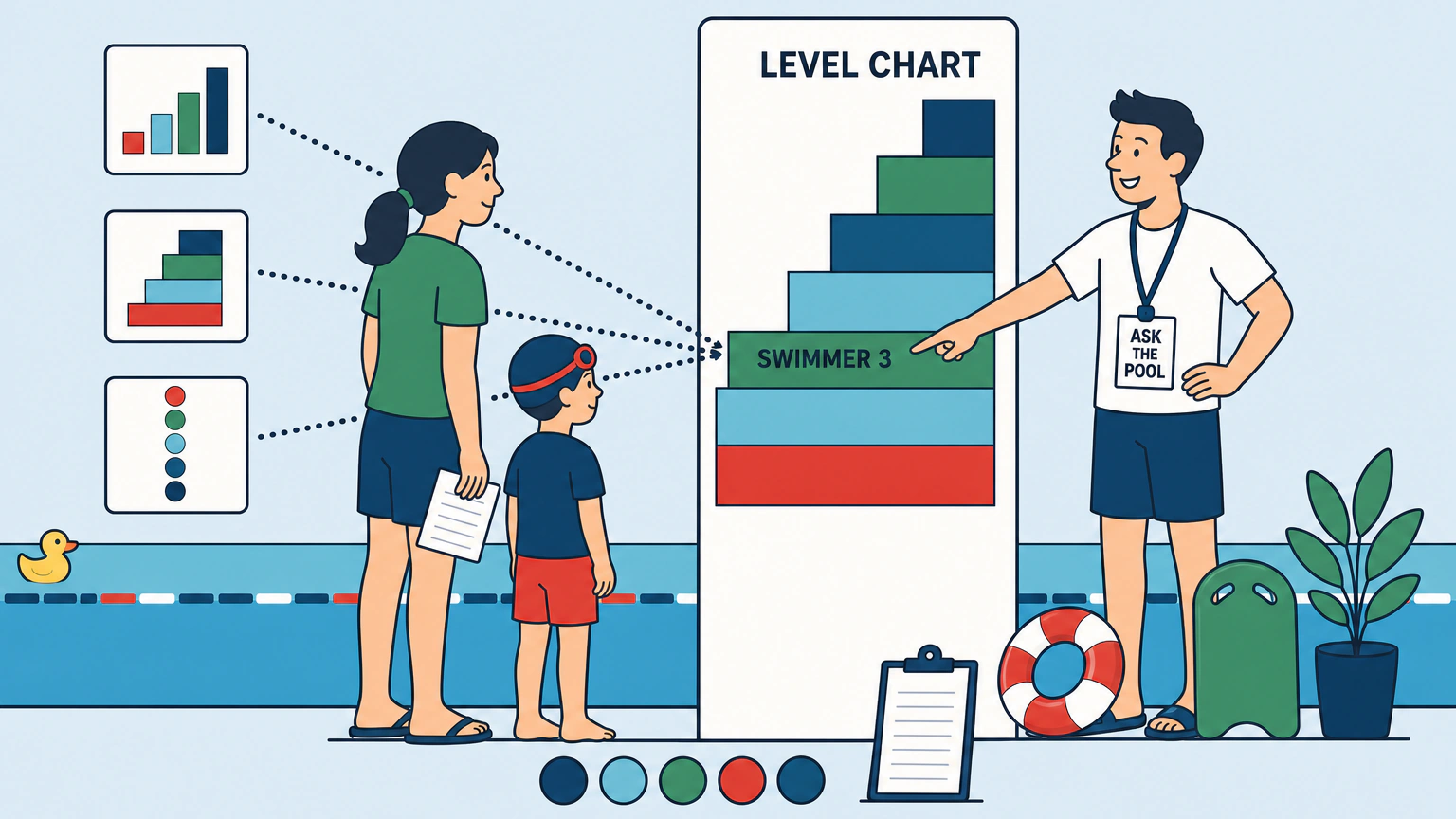
Many municipal pools teach the Lifesaving Society's Swim for Life program, which many of them switched to after the Canadian Red Cross wound down its swim lessons. Levels run from Parent and Tot through Preschool and Swimmer to Adult Swimmer. Instructors train on the Society's Swim Instructor course.
Private swim schools run their own stages and usually offer smaller classes in warmer teaching pools. That warmth matters for toddlers, who stop listening once they're cold. Ask how many children share a teacher and whether the teacher gets in the water with them.
Our listings show what each swim school states on its own website. The province and city lists below lead to swim schools in your area.
Cost of swimming lessons in Canada
Compare public recreation and commercial swim schools separately, then match lesson length and instructor-to-swimmer ratio. A regular-enrolment lesson rate can require a larger monthly or term payment.
| Class or program | Estimated price and payment unit | What to check |
|---|---|---|
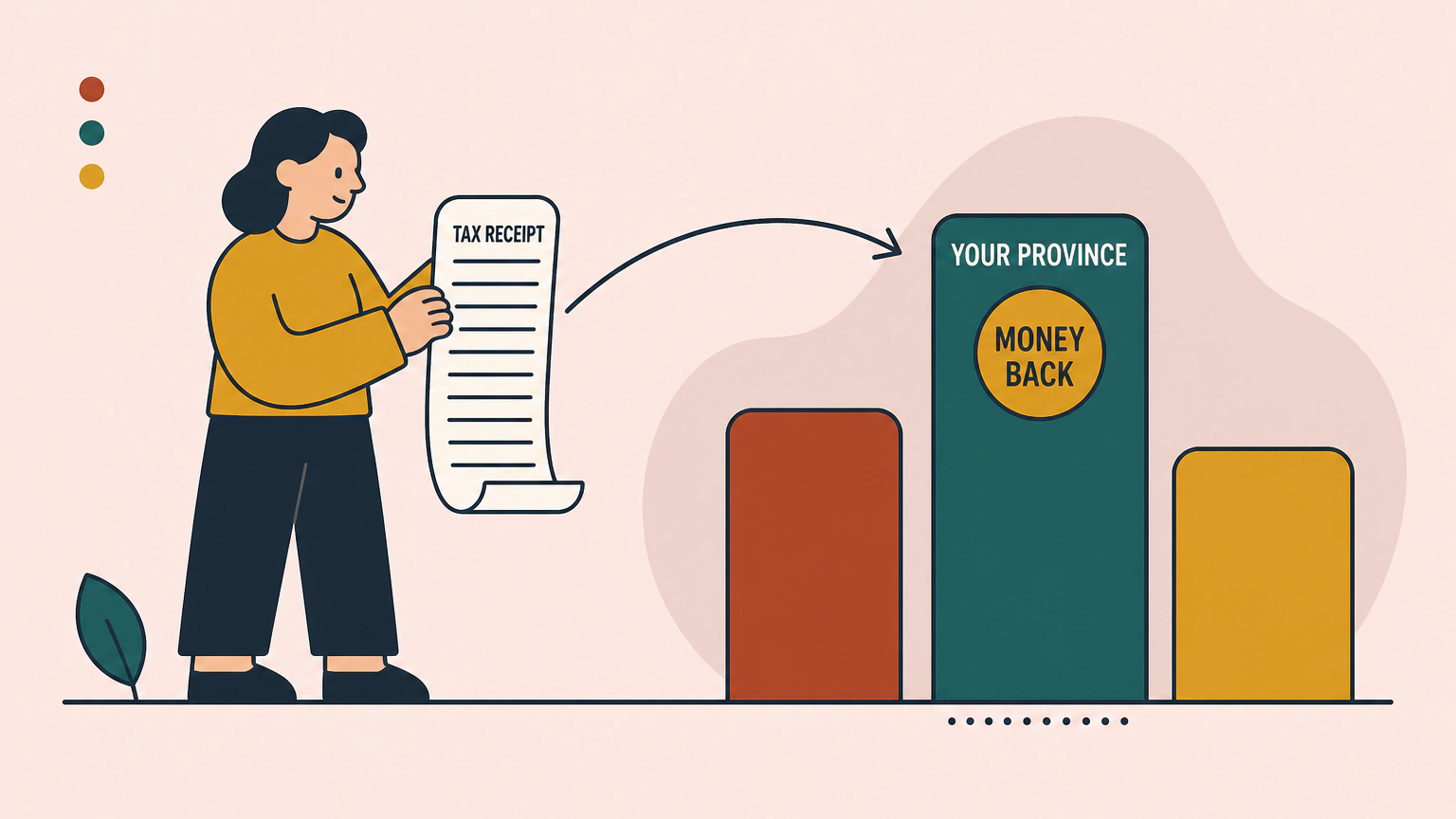
| Public recreation: course totalEligibility and registration priority can depend on residency, taxpayer status or membership. Enrol for the complete course; eligibility conditions apply. | ||
| Public early-years swimming course | C$50–C$90per child for 8–10 lessons of 30 minutes | Covers parent-and-tot, preschool and early learner levels. Check the relevant resident, taxpayer or non-member rate and registration eligibility. |
| Commercial schools: lesson ratesRegular-enrolment rates require monthly or term registration. Single private bookings are labelled separately. | ||
| Children’s group lessons, regular enrolment | C$20–C$35per swimmer per 30-minute enrolled lessonMonthly or term enrolment applies. Confirm the lesson count and full first payment. | These classes have three or four swimmers per instructor. Match the swimmer’s age and ability before comparing the lesson rate. |
| Parent-and-tot lessons, regular enrolment | C$20–C$40per child-and-caregiver place per 30-minute enrolled lessonMonthly or term enrolment applies; the required payment covers more than a single lesson. | A caregiver joins the child in the water. Check the age band, group size and equipment required for each lesson. |
| Shared lessons for two, regular enrolment | C$30–C$45per swimmer per 30-minute enrolled lesson, two swimmersEnrolment is for a monthly plan or a term; some seasonal sets run for 7–10 weeks. | Check whether both swimmers must have similar skills and whether you must bring the second swimmer. Confirm the complete pair’s charge. |
| Single private swimming lesson | C$30–C$70per swimmer for 30 minutes | One swimmer works with the instructor. Check the age range, pool access and whether the appointment targets confidence, technique or a specific skill. |
What affects the total?
- The swimmer-to-instructor ratio affects individual attention.
- Registration charges, pool admission and required swimwear can add to tuition.
- Missed-class, closure and make-up policies change the value of prepaid lessons.
Before you book
- What is the full first payment, how many lessons does it cover, and are registration and pool admission included?
- Can we make up missed classes or change level, and what happens to prepaid tuition?
- For adaptive needs, what instructor training, swimmer ratio, support-person access and extra charges apply?
Budget tip
Check public recreation eligibility first, then compare commercial options at the same lesson length and swimmer-to-instructor ratio.
Other options
Adults choosing a group course should distinguish beginner instruction from stroke improvement and ask for the complete course fee and lesson count.
The public range covers early-years courses. Municipal programs also serve older children and adults; check their levels, eligibility and complete course fees separately.
Frequently asked questions
What should a first swim lesson cover?
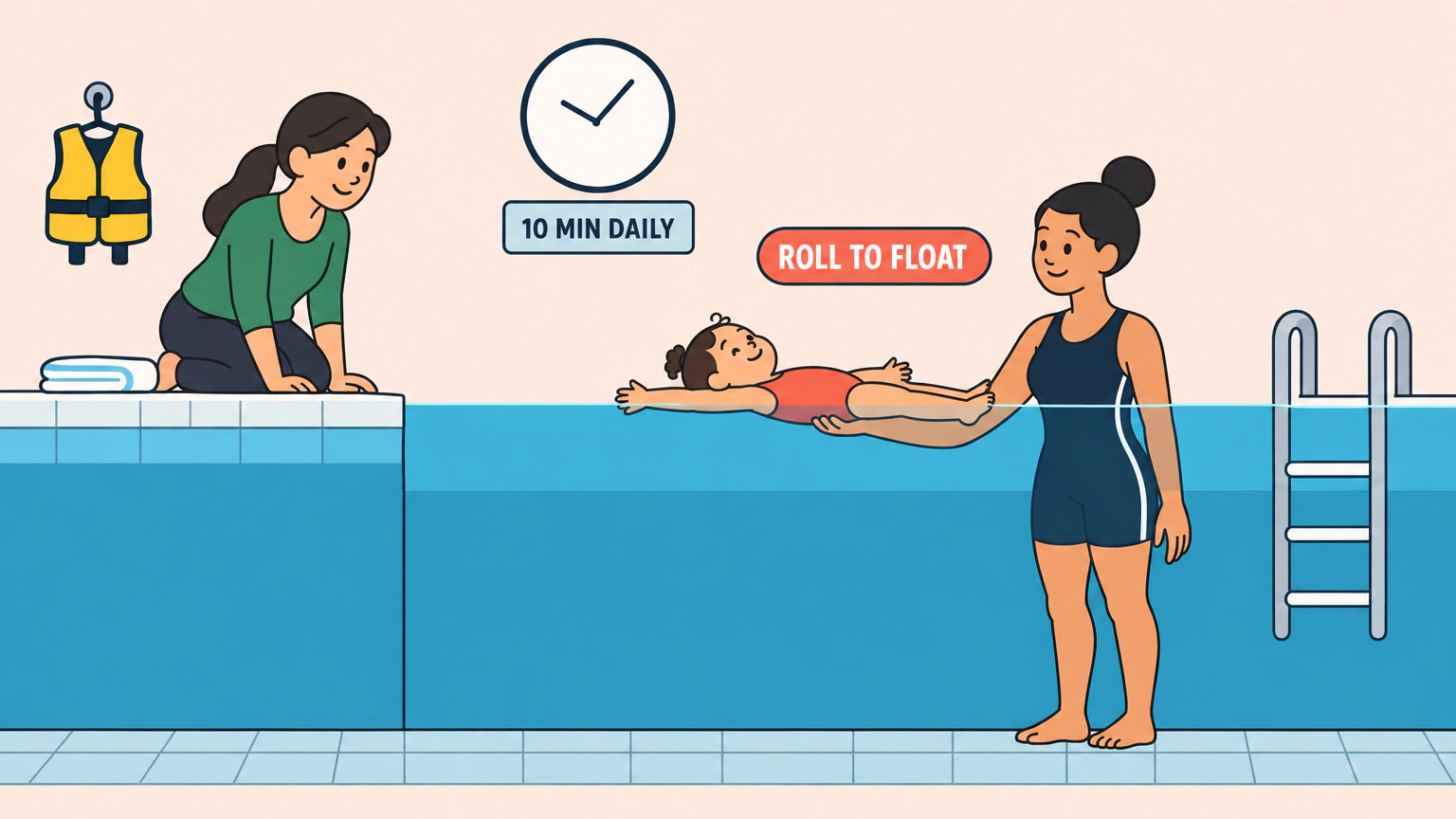
Water safety first: getting in and out, putting a face in, floating on the back and reaching the wall. The Lifesaving Society's Swim to Survive standard sets the minimum skills for surviving a fall into deep water. You roll in, tread water, then swim to safety. The Society says it isn't a replacement for lessons, but it's a useful check on whether lessons are working.
What happened to Red Cross swimming levels?
The Canadian Red Cross wound down its swim and lifeguard programs and recommended that the pools teaching them switch to the Lifesaving Society. Many pools now teach Swim for Life instead. Level names and some skills differ, so a child with an old Red Cross report card will usually be assessed and placed. Some cities published conversion charts, which help when you're matching old levels to new ones.
Does a level from another school count?
Between pools that both teach Swim for Life, often yes, because they're working from the same program. Private schools usually run their own stages, and almost every one assesses a new swimmer before placing them. Expect that rather than resent it. If your child lands lower than you hoped, ask what's missing, because a clear answer shows the school knows its own levels.
Who trains the instructors at my local pool?
At pools running Swim for Life, instructors take the Lifesaving Society's Swim Instructor course, and the Society runs update clinics for existing staff. Private schools may train their teachers other ways. Ask what the person teaching your child holds and whether it's current. A good school answers that question quickly, and it won't mind you asking twice.
Who supervises the changing rooms and poolside?
Ask, because swimming is where children change and adults are close by. A school should have a photo rule, a clear policy on who uses which changing room, and adults on deck who aren't teaching. The pool or school decides whether staff need a vulnerable sector check, which adds pardoned sexual offences to a police check. Ask whether its instructors have one.
Can an adult who is scared of water learn?
Yes. The Lifesaving Society's Swim for Life program has an Adult Swimmer module for teens and adults, and many municipal pools run it. A good class starts in shallow water, sets no deadline and doesn't push your face under on the first night. Ask whether the class is adults only. Sharing the pool with a noisy kids' lesson puts plenty of nervous beginners off.