Overview: Piano Lessons
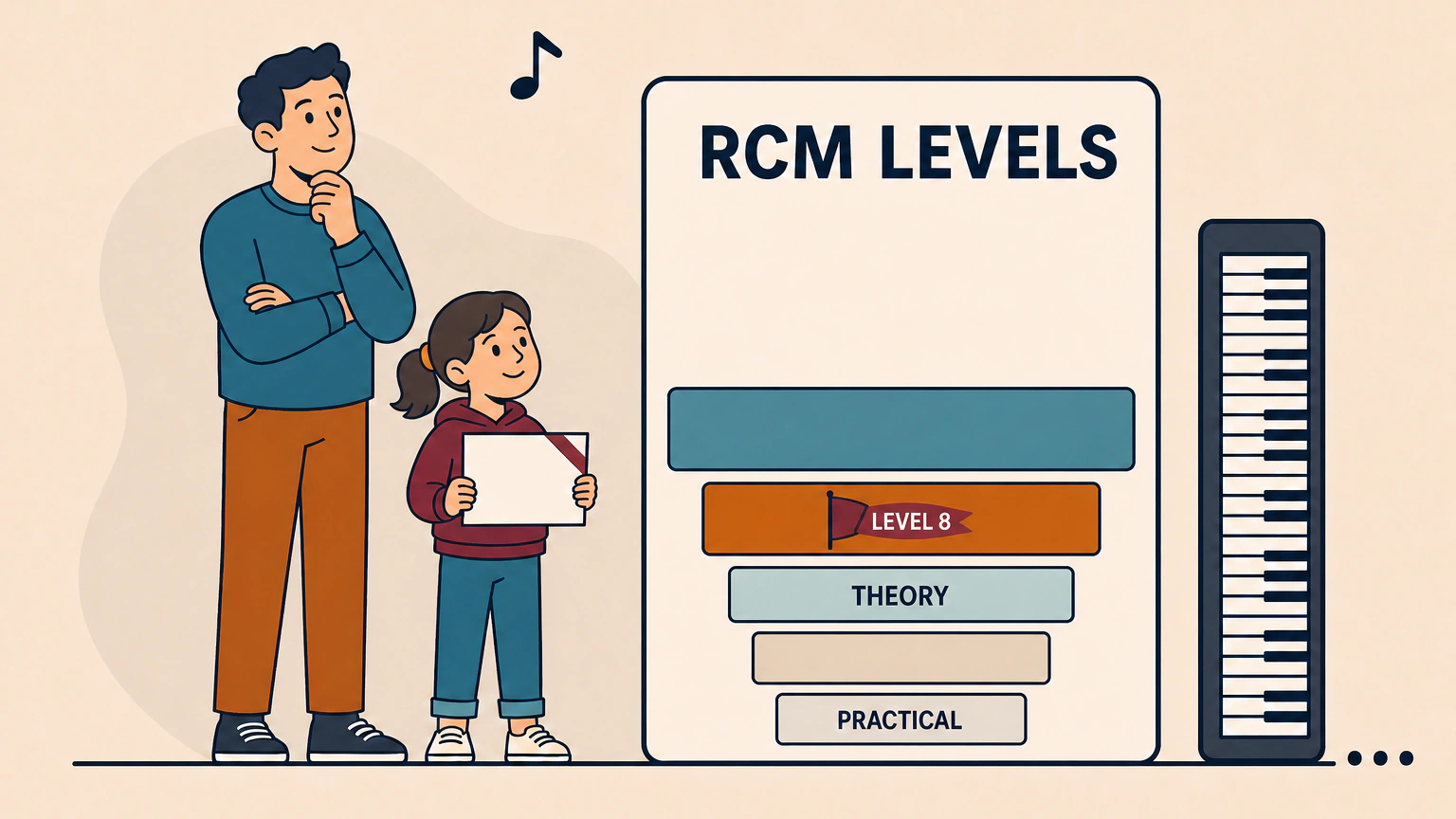
Sooner or later, most Canadian piano students meet the Royal Conservatory. Its Certificate Program runs from a beginner level up to diplomas, with a practical exam at each level and theory exams added as students climb. Conservatory Canada has its own graded system, and Quebec's conservatories run theirs. Plenty of good teachers never enter anyone for anything, so ask early which road a studio takes.
The exams can pay off at school. Ontario lets a high school principal grant optional music credits for the upper RCM levels. The student needs both the practical and the theory exam. British Columbia lists RCM exams among its approved external credentials too.
Two practical things are worth knowing before the first invoice arrives. The Canada Revenue Agency treats private music lessons as exempt from GST and HST, so a plain lesson bill shouldn't carry either. And an acoustic piano in a furnace-heated house dries out over the winter, which pulls it out of tune and is hard on the wood. A room humidifier and a tuning once the heat is on will save you grief.
Our listings show what each studio states on its own website, from exam work to the ages it takes. Start with your province, then your city, and the local piano teachers come up.
Cost of piano lessons in Canada
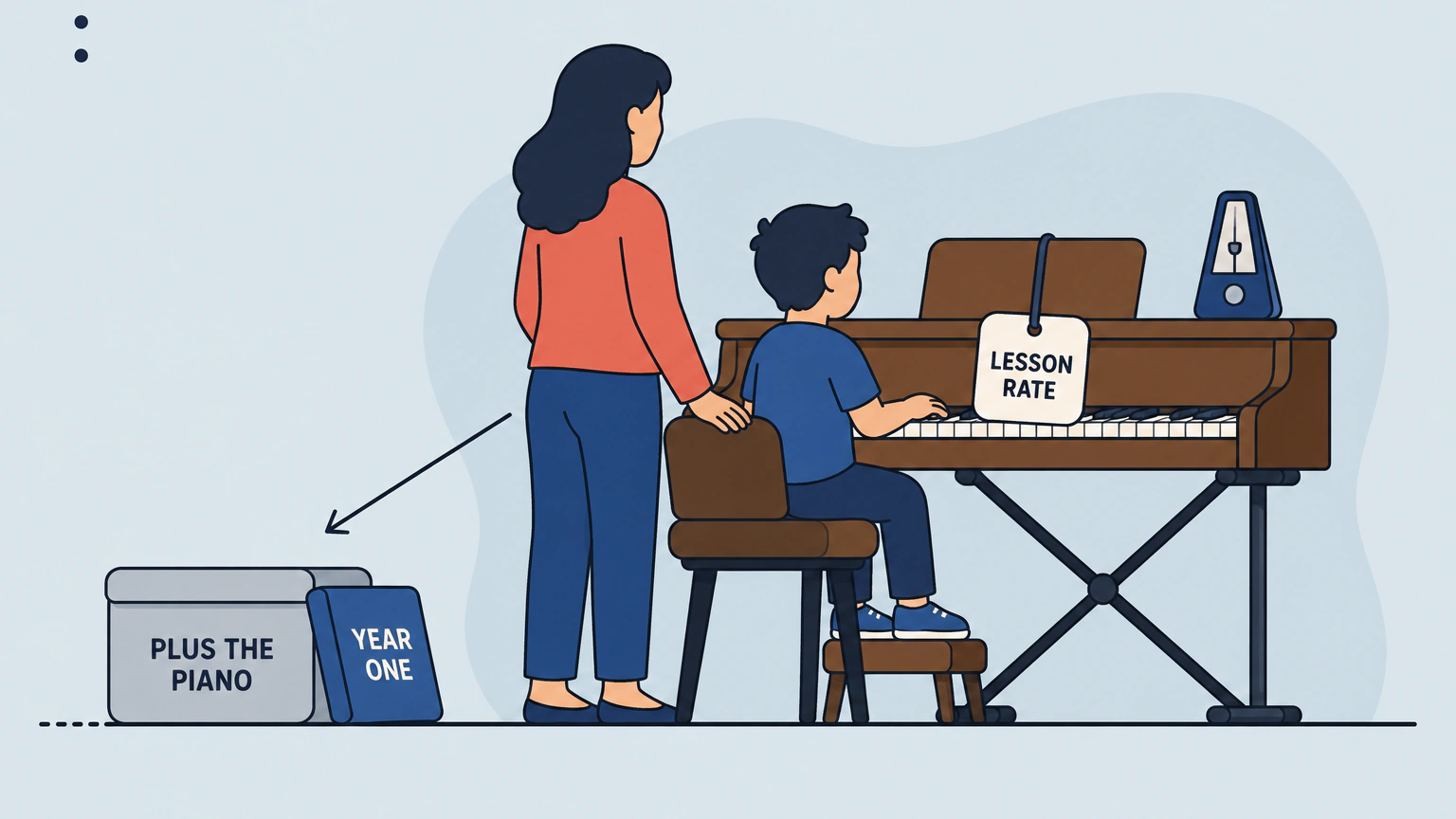
Choose a lesson length that fits the student’s age, goals and practice routine. Compare regular studio tuition, home visits and complete beginner courses, then budget for the instrument and any optional exam pathway.
| Class or program | Estimated price and payment unit | What to check |
|---|---|---|
| Private studio piano lesson rate, 30 minutes | C$30–C$40per student, per 30-minute lessonRegular enrolment; confirm the minimum term, billing schedule and withdrawal notice. | Ask whether this length suits the learner’s age, concentration and practice routine, and what should be practised at home. |
| Private studio piano lesson rate, 45 minutes | C$40–C$65per student, per 45-minute lessonRegular enrolment; confirm the minimum term, billing schedule and withdrawal notice. | Ask how the extra time is used for repertoire, technique or theory, and whether separate theory classes are expected. |
| Private studio piano lesson rate, 60 minutes | C$45–C$85per student, per 60-minute lessonRegular enrolment; confirm the minimum term, billing schedule and withdrawal notice. | Check whether advanced repertoire or optional exam preparation needs this length, and which specialist or examination charges remain separate. |
| Adult beginner group piano course | C$245–C$420per student, total for 10–12 × 60-minute classesFull course tuition; registration may be extra. Instalments do not reduce the total course commitment. | Check the exact class count, number of learners per keyboard and whether you need an instrument for practice at home. |
| In-home piano lesson rate | C$60–C$95per student, per 60-minute home lessonRegular enrolment; confirm the minimum term, billing schedule and withdrawal notice. | Check the travel fee and visit area. Ask whether your piano or keyboard is suitable and whether neighbouring family appointments reduce travel charges. |
What affects the total?
- Monthly payments may cover a fixed teaching year with holidays and a set lesson count.
- A home instrument, books and any required recital charges affect the starting budget.
- Optional exams, accompanying theory and specialist preparation can add separate costs.
Before you book
- Which lesson length fits the learner, and what practice instrument is needed at home?
- How many lessons do my payments cover, and what are the make-up and withdrawal rules?
- Which books, recitals, theory classes or exam fees are required, and which can I decline?
Budget tip
Four 30-minute lessons would total C$120–C$160 in tuition, plus extras. Confirm the scheduled lesson count instead of assuming every monthly payment buys four lessons.
Private lesson ranges above are for studio tuition. Live online teaching should be compared separately at the same length. RCM exam preparation is an optional learning goal.
Frequently asked questions
Do we need a piano at home before starting?
Yes, and it should be a real keyboard, not a toy. A digital piano with weighted, full-size keys and a pedal is a fair start, and headphones keep the peace in an apartment or condo. Some music stores rent pianos and count part of the rent toward buying one later, so ask. An acoustic upright needs steady humidity, and a dry Canadian winter will test it.
Should a piano teacher add GST or HST to lessons?
Usually not. The Canada Revenue Agency treats private music lessons as exempt, as long as they're lessons that build playing skills over time. The line blurs with recreational programs where music is only part of the fun, like a toddler class mixing songs, games and play. Those can be taxable. If a bill for ordinary piano lessons shows GST or HST, ask the studio why.
Are graded exams worth entering?
They're optional, and they suit some children more than others. Most exam work here follows the Royal Conservatory. Conservatory Canada offers another graded route. An exam gives a student a syllabus, a date and an outside ear. Higher levels also call for theory exams, which adds homework. Ask what the teacher does with a student who isn't exam-minded, because that tells you how they teach.
Can piano exams count toward high school credits?
In some provinces, yes. In Ontario, a high school principal can award optional music credits for the upper Royal Conservatory levels. Your teen needs the practical and the theory exam, and the mark is the average of the two. The credits count as electives, not the required arts credit. British Columbia also lists RCM exams as an approved external credential. Bring the certificates to school.
What if we stop lessons partway through the year?
Where you live matters. Quebec's consumer protection office counts music schools under its rules for courses, and you can cancel in writing at any time. Before the first lesson you owe nothing. After that, you pay for lessons already given plus a small penalty that the law caps. Outside Quebec, read the studio's cancellation policy before you pay for a term.
What should I expect from a lesson in someone's home?
Most private teaching happens in the teacher's house, and a parent sitting in is normal. Ask whether you can stay, and who else is home during lessons. A vulnerable sector check is a police check plus a search for pardoned sexual offences. The organization offering a role decides whether it needs one. A teacher working alone may only have a regular police check, so ask what they hold.